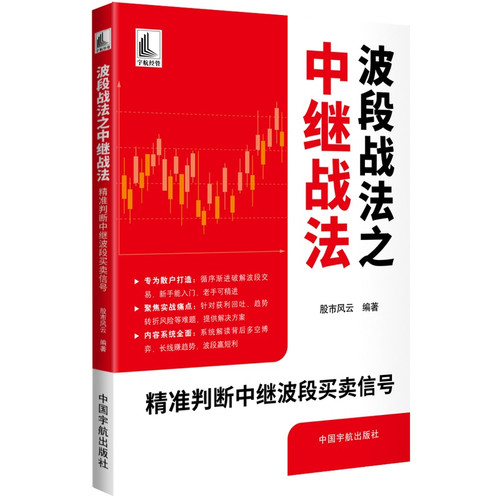
Based on the author's over 30 years of practical experience in securities trading, and inspired by chaos and fractal theories, this book systematically analyzes the self-similarity patterns in intraday microstructures. By combining intraday structure analysis with macroeconomic trends, meso-level structures, policy factors, fundamentals, and market sentiment, it offers valuable practical guidance. Starting with the basic components of intraday structures, the book categorizes and analyzes two typical intraday patterns—one of upward momentum and the other of downward momentum—and their market implications. It also delves into the trading habits, trend inertia, and turnover characteristics of three different types of funds: institutional investors, speculative investors, and retail investors. Incorporating numerous real-world case studies, the book also analyzes the differences in the soft and hard structures of limit-up intraday patterns, the concepts of limit-up to limit-down and limit-down to limit-up, and strategies for dealing with high-frequency trading scenarios such as limit-up failures and limit-down reversals. It incorporates classic securities trading theories and techniques from developed Western countries.
本书基于作者30余年证券交易实战经验,受混沌与分形理论启发,系统梳理了分时微观结构中的自相似性规律。分时结构结合宏观趋势、中观结构、政策面、基本面及市场情绪等要素综合研判,可以发挥实战指导价值。本书从分时结构的基本构成入手,分类解析了助涨与助跌两种典型分时形态及其市场含义,并深入探讨了机构、庄股、游资三类不同性质资金的操盘习性、趋势惯性及换手率特征。结合大量实战案例,书中还剖析了涨停板分时结构的软硬差异、天地板与地天板、炸板与砸板等高频交易场景的应对策略,既吸纳了西方发达国家较为经典的证券交易理论和技术方
本书基于作者30余年证券交易实战经验,受混沌与分形理论启发,系统梳理了分时微观结构中的自相似性规律。分时结构结合宏观趋势、中观结构、政策面、基本面及市场情绪等要素综合研判,可以发挥实战指导价值。本书从分时结构的基本构成入手,分类解析了助涨与助跌两种典型分时形态及其市场含义,并深入探讨了机构、庄股、游资三类不同性质资金的操盘习性、趋势惯性及换手率特征。结合大量实战案例,书中还剖析了涨停板分时结构的软硬差异、天地板与地天板、炸板与砸板等高频交易场景的应对策略,既吸纳了西方发达国家较为经典的证券交易理论和技术方