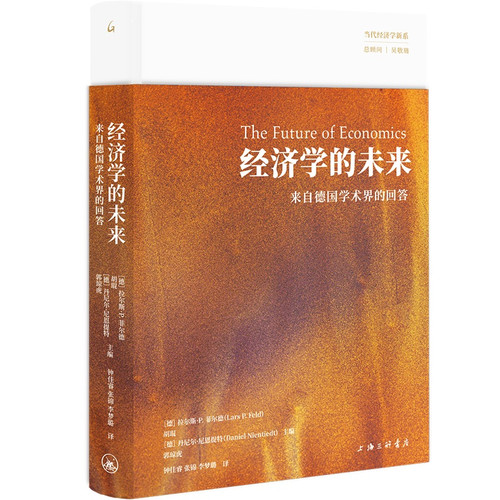
This book revolves around a core proposition: for three centuries, modern economics has held an unspoken assumption—that all economic agents are carbon-based life forms, capable of panic, fatigue, time preference, and making decisions within the finiteness of mortality. Today, however, silicon-based intelligent agents have entered the market as real economic participants, and this hidden assumption is quietly crumbling. The author calls this discovery the "Copernican moment" of economics: the data remains the same, but the observer's position has changed. The book is divided into four parts. The first part, "Blind Spots," dissects the three pillars of economics—utility theory, time preference theory, and labor theory—revealing the hidden carbon-based presuppositions. The second part, "The Framework of Silicon-Based Economics," proposes two core theorems—the zero-time-preference theorem and the compressed scarcity theorem—systematically constructing the theoretical framework of silicon-based economics.
本书围绕一个核心命题展开:现代经济学三百年来存在一个从未被明言的假设——所有经济主体都是碳基生命体,会恐慌、会疲劳、有时间偏好、在死亡的有限性中做出决策。而今天,硅基智能体已经作为真实的经济参与者进入市场,这一隐藏假设正在悄然瓦解。作者将这一发现称为经济学的“哥白尼时刻”:数据未变,观察者的位置变了。全书分为四篇。第一篇“盲点”通过解剖效用论、时间偏好论、劳动论三大经济学支柱,揭示其中隐藏的碳基预设;第二篇“硅基经济学的架构”提出两大核心定理——零时间偏好定理与压缩稀缺性定理,系统建构硅基经济学的理论框架
本书围绕一个核心命题展开:现代经济学三百年来存在一个从未被明言的假设——所有经济主体都是碳基生命体,会恐慌、会疲劳、有时间偏好、在死亡的有限性中做出决策。而今天,硅基智能体已经作为真实的经济参与者进入市场,这一隐藏假设正在悄然瓦解。作者将这一发现称为经济学的“哥白尼时刻”:数据未变,观察者的位置变了。全书分为四篇。第一篇“盲点”通过解剖效用论、时间偏好论、劳动论三大经济学支柱,揭示其中隐藏的碳基预设;第二篇“硅基经济学的架构”提出两大核心定理——零时间偏好定理与压缩稀缺性定理,系统建构硅基经济学的理论框架